Kom Ombo: The Egyptian Temple of Duality and the Seat of Neutrality
A Temple Built for Two Gods
Most Egyptian temples belong to one god. Kom Ombo belongs to two, and the builders doubled everything rather than compromise. Two entrances. Two courts. Two hypostyle halls. Two sanctuaries. Walk through it and you're walking through two temples fused into one.
On one side: Sobek, the crocodile god, ruling the south. On the other: Horus the Elder, the hawk, ruling the north. There were likely two separate priesthoods here too, one for each god, tending their own half for centuries without the other.
The two halves still meet in one place. A shared courtyard at the center, where a granite altar sits directly on the line dividing them. It's the closest thing this temple has to a meeting point between two gods who otherwise kept to their own sides. And it's the only temple in Egypt built this way.
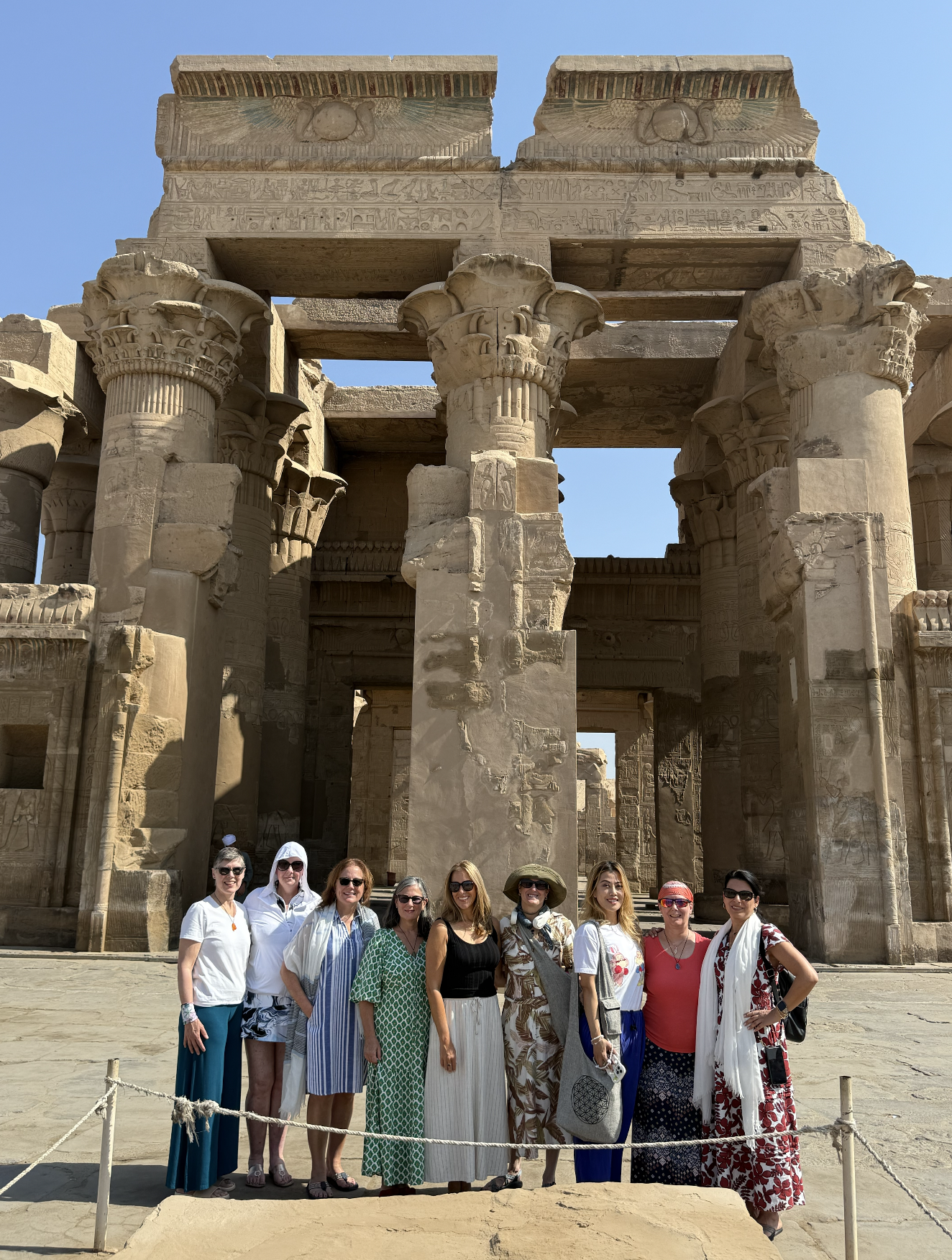
Kom Ombo Temple, Egypt
Sobek and Horus as Two Halves of the Same Mind
Here's where the myth gets personal.
Sobek carries everything primal. Instinct. Heightened senses. The kind of intelligence that keeps a creature alive no matter what gets thrown at it. He's not evil for representing this. He's necessary. Every one of us needs that sharp, reactive, self-protective layer just to function.
Horus the Elder carries the opposite gift. Higher perspective. A wider way of seeing, the vantage point of something looking down from the sky instead of up from the river. Where Sobek reacts, Horus perceives. Where Sobek survives, Horus understands.
For years, teachers and coaches have explained this split using something called the triune brain model. The idea that our brains formed in layers: a reptilian brain at the core, an emotional layer built on top of it, a reasoning layer on top of that. You've probably heard some version of this if anyone's ever told you to calm your lizard brain.
Contrary to once popular belief, that's not actually how your brain formed.
Neuroscientists have moved past the layered model, because your brain was never layered like that in the first place. Not the way sediment settles into stripes you can still pick apart. Not even the way a seven-layer dip keeps its sour cream distinct from its guacamole, distinct from its beans. Your brain is more like a cake. Once it's baked, you can't pull the eggs back out from the flour, or find the exact line where the sugar ends and the butter begins. Every ingredient is fully present. It's just all been folded into one whole.
Which is, in its own way, exactly what this temple is teaching. Not two forces that need to be separated and ranked, one primitive, one superior. Two forces baked into the same nature. Sobek's instinct and Horus's perspective were never meant to compete for the top layer. They were built to be worked with together. Side by side. Meeting in the middle. The same way the temple was.
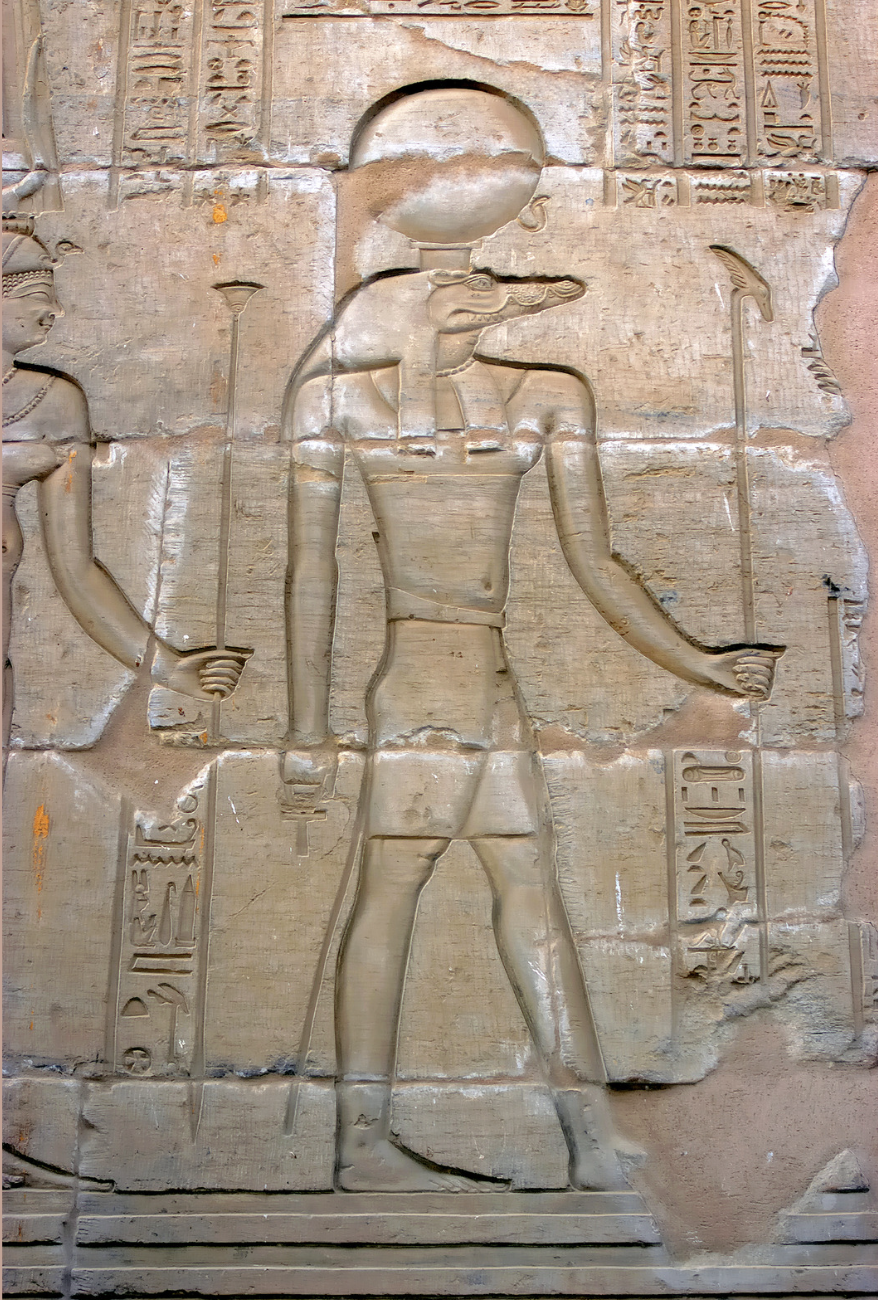
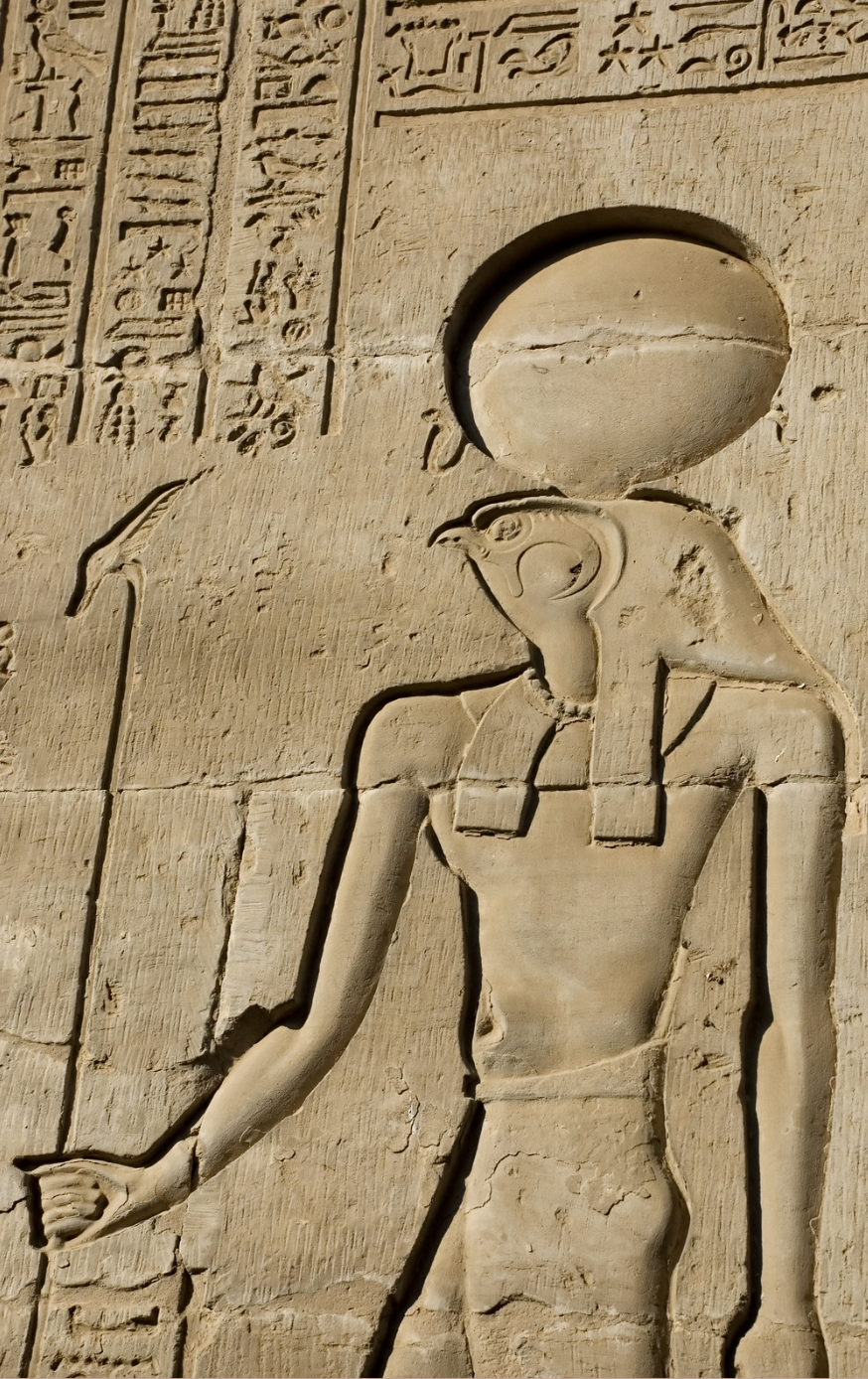
The Myths and Lore Behind the Two Gods
Sobek's parents tell you almost everything about him before the stories even start.
His mother, Neith, is one of Egypt's oldest goddesses. A warrior who carried a bow into battle. A weaver credited with spinning the very fabric of existence on her own loom. His father, Atum, is the self-created god, the one who rose alone out of the waters of chaos before anything else existed, his name literally meaning “the complete one.”
Born of a warrior-creator and the totality of being. No wonder Sobek came out fierce and unpredictable.
The ancient Egyptians didn't soften him in their own writing, either. Temple inscriptions and religious texts call him “he who loves robbery.” “He who eats while he also mates.” “Pointed of teeth.” “The raging one.” These aren't modern inventions. They're real epithets, carved and written by the people who worshipped him. And yet soldiers called on him before battle, wanting his ferocity to become their own protection.
That's Sobek in full. A danger you invite in, not one you banish. Healer and threat in the same body. Exactly like the Nile he was born to represent.
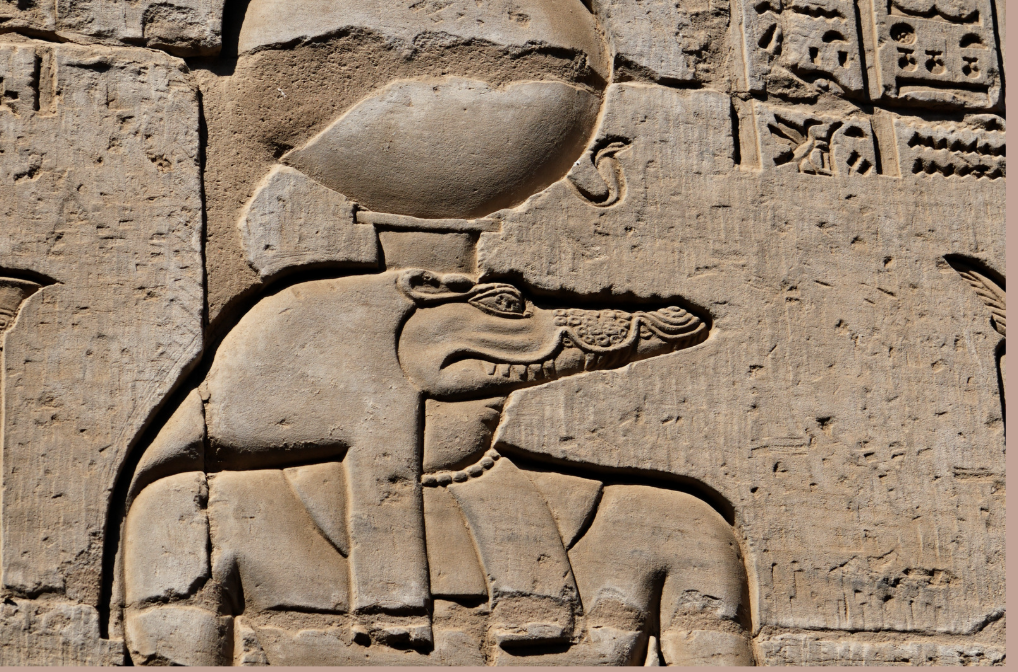
Sobek, the Crocodile God
Horus the Elder carries his own duality, and it lives entirely inside himself. As the sky, his right eye is the sun. His left eye is the moon. Day and night, watched over by the same god. Egyptian myth also tells of a battle where one of his eyes was torn out and later restored by the god Thoth, an injury and healing so significant it was said to explain why the moon waxes and wanes. There are two Horus figures in Egyptian myth, elder and younger, and honestly, they blur together more than most people realize, even in the historical record. So I'll hold this one loosely. What's solid: Horus's eyes were the sun and the moon.
Here's something that stopped me while I was researching this.
You may have grown up hearing about four siblings born to the sky goddess Nut and the earth god Geb: Osiris, Isis, Set, and Nephthys. That's what I always understood too. But there's an older tradition, recorded by the Greek writer Plutarch, that names a fifth. The story goes that Ra forbade Nut from giving birth on any day of the regular calendar. So Thoth won her five extra days, outside of time itself. Osiris was born on the first of those days. Horus the Elder on the second. Set on the third. Isis on the fourth. Nephthys on the fifth.
Horus the Elder isn't some minor character invented later. He's original family. Present from the very beginning, standing in the same lineage as Isis and Osiris themselves.
Where Sobek's duality plays out between two parents and two natures, Horus's plays out inside a single face. Sun and moon, seeing through the same eyes.
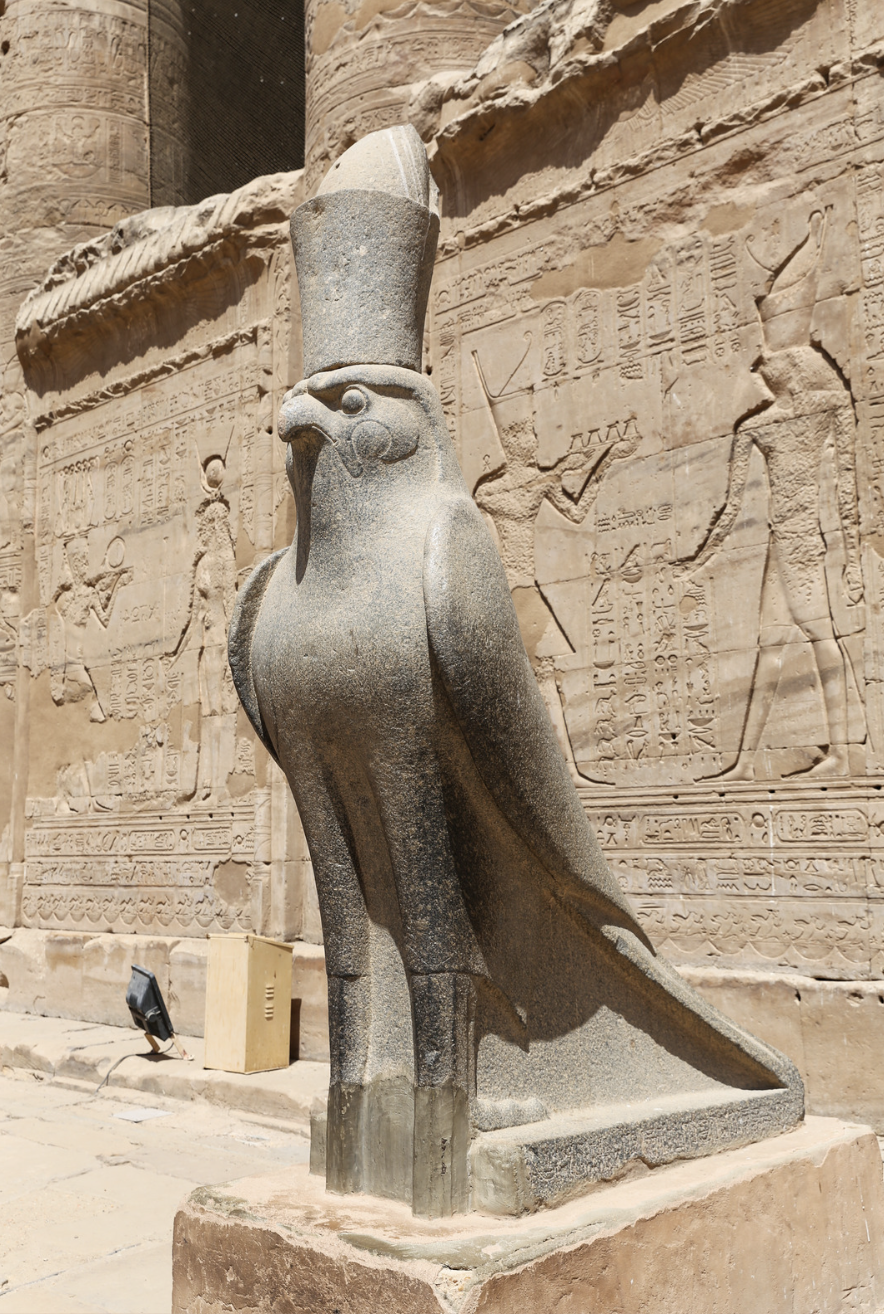
Horus, the falcon-headed God
A Working Temple, Not Just a Beautiful One
Kom Ombo wasn't only myth and architecture.
The temple's own walls carry calendars recording real festivals, on real dates, so some of this we know with confidence. The Festival of the Victory of Horus happened on the new moon of Epiphi, roughly July, with processions, music, dancing, and banquets stretching over several days. Sobek had his own festival tied to the Nile's annual flooding, honoring his role in the waters that made the whole valley fertile. Priests brought daily offerings, food, drink, clothing, ointments, to the cult statues of both gods. On special occasions, those statues were carried out of the temple in procession, for the whole community to witness.
Here's the detail that gets me most.
Within the temple grounds sat a stone basin connected directly to the Nile, sometimes called the Crocodile Well. Priests kept a single living crocodile there, chosen and tended as Sobek's earthly vessel. Not a carving. Not a symbol. A living creature, cared for daily, believed to carry the god's own presence inside its body. Walk through the Crocodile Museum next door today, and the mummified crocodiles on display are the descendants of that same tradition. Animals once honored in life the way we might build an altar for a god now.
The temple's medical reputation is real, but I want to hold it a little more loosely than most retellings do. The famous relief showing surgical instruments, scalpels, forceps, and other tools does exist, and Haroeris was known in some traditions as “head of physicians.” But whether this was an actual working clinic, or a temple simply honoring healing as one of Horus's sacred roles, isn't something I found solid proof of either way. I'd call it likely, not confirmed. Same goes for the fertility rituals so often mentioned alongside Sobek. Reasonable, given who he was. But not something I can point to a specific ancient record and say, yes, this happened, here.
What I Remember
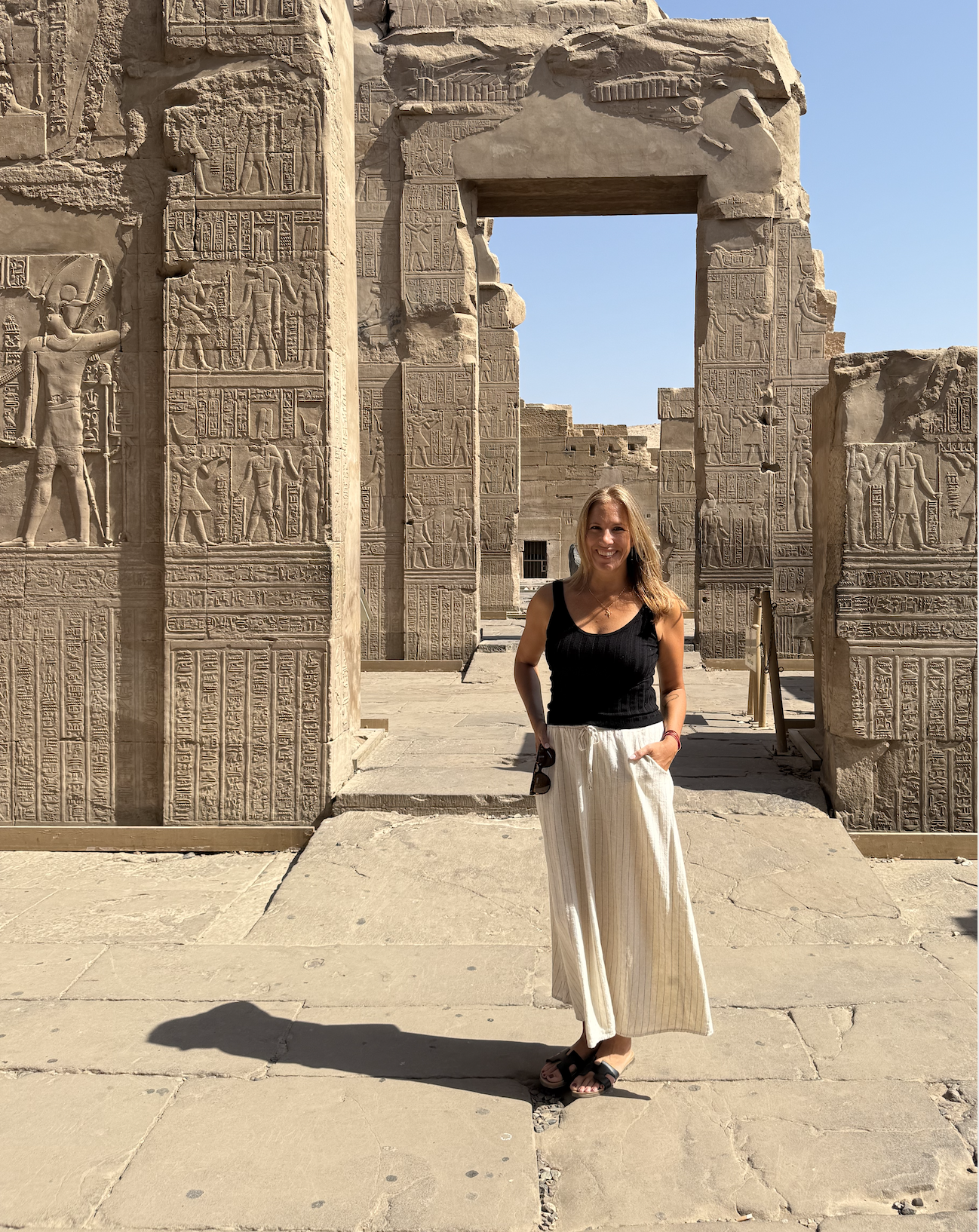
The first time I walked through Kom Ombo, something rose up in me before I'd even reached the inner sanctuary.
I've been here before.
Not this body. Not this lifetime. But some older part of me recognized the stone under my feet.
In the memory, I was an older woman. A priestess, well into my years, my own initiation long behind me. I remembered surviving it, the crocodiles, the descent, whatever it demanded of me at the time. I remembered the reverence it took. The strength. The courage that had to be real, not performed, because something ancient was watching to see if it was.
By the time this memory picks up, I wasn't the one being initiated anymore. I was the one preparing others for it. Teaching the ones who came after me what I'd had to learn the hard way: that courage isn't the absence of fear; it's what you do with your heart once fear is already in the room.
A question arrived with the memory, the same one I imagine I asked every initiate who stood where I once stood. Do you have the courage to do what your heart asks of you?
I remember understanding, in that space, that growth isn't linear. It's circular. The heart opens, and opening it doesn't just make you softer; it gives you a higher vantage point. Clearer sight. The more the heart expands, the more you can see. But you have to be grounded first, grounded enough in your own body that you can step outside it and still see the whole shape of things. Only then does the courage mean anything. Only then can you act from it instead of just feeling it.
I remember Sobek in my lower body. Not as an idea. As a felt thing, low in the hips, low in the belly, ancient and alive.
I remember a healing wall somewhere in that temple, priests and priestesses doing work there I'd call psychic surgery now, though I don't know what we called it then.
And I remember this, most of all: Horus and Sobek were both gods, both masculine, and yet they governed entirely different parts of the body. Different chakras, different registers of being. Working with one didn't cancel out the other. That was never how it worked. Balance wasn't a compromise between them. It was what happened when both were finally allowed to do their work in the same body, at the same time, without either one having to lose.
What the Temple Still Teaches
Every ancient civilization asked the same questions. Why am I here? How did I get here? What's the purpose of this journey? How do I succeed at this life?
Eventually, they named deities who personified the wisdom they were reaching for. At Kom Ombo, that meant Sobek, the crocodile, symbolizing fierce protection, procreation, longevity, and an enduring presence. The Egyptians recognized that crocodiles were ancient long before they were, and would likely outlast them too. A favored species. Which meant there was something to be learned from them.
Sobek represented power. Enduring strength. Primal. Instinctual. Fierce. Qualities they revered, not qualities they feared. Honoring the crocodile meant claiming those qualities as their own, pinpointing what they valued as a species. Sobek's realm was what lurks and thrives beneath the surface. The underworld. The darkness.
In us, that underworld is the dark, primal impulses we all harbor. Anger. Passion. Sexual desire. Fantasy. But the Egyptians, like every community that thrives, had a code. A moral GPS. An understanding that actions carry consequences, that the collective mattered more than any one person acting purely on desire. They recognized the power stored in that part of themselves. They didn't disown it.
And then there was Horus. The one who acts on behalf of the All. A wise, all-seeing sage who could hold the biggest picture: past, present, future possibility, the true map. He carried that ability because he was designated to lead from the highest perspective. Through decisions made from neutrality and higher wisdom, not blind rage or carnal desire.
The Egyptians understood that this union of opposites was necessary to reach their destiny. They didn't label the primal “bad” out of fear. They respected the light inside the shadow. And they understood something else too: Horus's own gifts required amplification by the very shadow Sobek represented. Without the dark, you cannot know the brightness of the light.
Light and dark were never meant to be at war. This isn't a contest where one side wins. They're two sides of one coin, two very different faces, still one coin. As a human, you'll always oscillate between them, or somewhere in between, for your whole life. The job was never to pick a side. The job is to honor both. To accept that you can never banish one or the other fully. The most evil people still carry some light. The most enlightened humans still walk through dark nights of the soul. The crocodile inhabited this Earth long before us and will likely remain long after we're gone. You cannot stand at one end of the spectrum forever. If you could, your soul wouldn't have chosen to come here at all.
The Ancient Egyptians knew this. Why not honor both poles, recognize them as holy, and endeavor to integrate them both, becoming what the Egyptians called the resurrected Osiris. The fully integrated human. The anthropos.
The Temple Structure as Your Body
As a human living inside duality, you have a yin side and a yang side, feminine and masculine, receiving and giving, light and dark, and you have a space of neutrality running down the exact center line of your body. Your spinal column. Like an energetic tube encasing that column, you carry your own central channel.
For your entire incarnation, you'll always be standing inside your own body temple of opposites.
If you work with that central channel, if you widen it and lengthen it until it holds both poles at once, you're no longer choosing a side. You're holding all of you. The full breadth of you.
A Practice From the Temple
Bring your awareness into your heart, then let it travel down into your spine, the central channel running through the exact center of you.
Notice your own Sobek: instinct, fierce protection, primal hunger. And your own Horus: higher perspective, the part of you that sees past, present, and future at once.
Now breathe. With each inhale, let that central channel widen. With each exhale, let it lengthen. Keep going until it's wide enough to hold both of you at once, instinct and perspective, shadow and light, with neither one needing to win.
You're not choosing a side. You're becoming the space that holds them both.