Luxor Temple: A Map of the Human Body
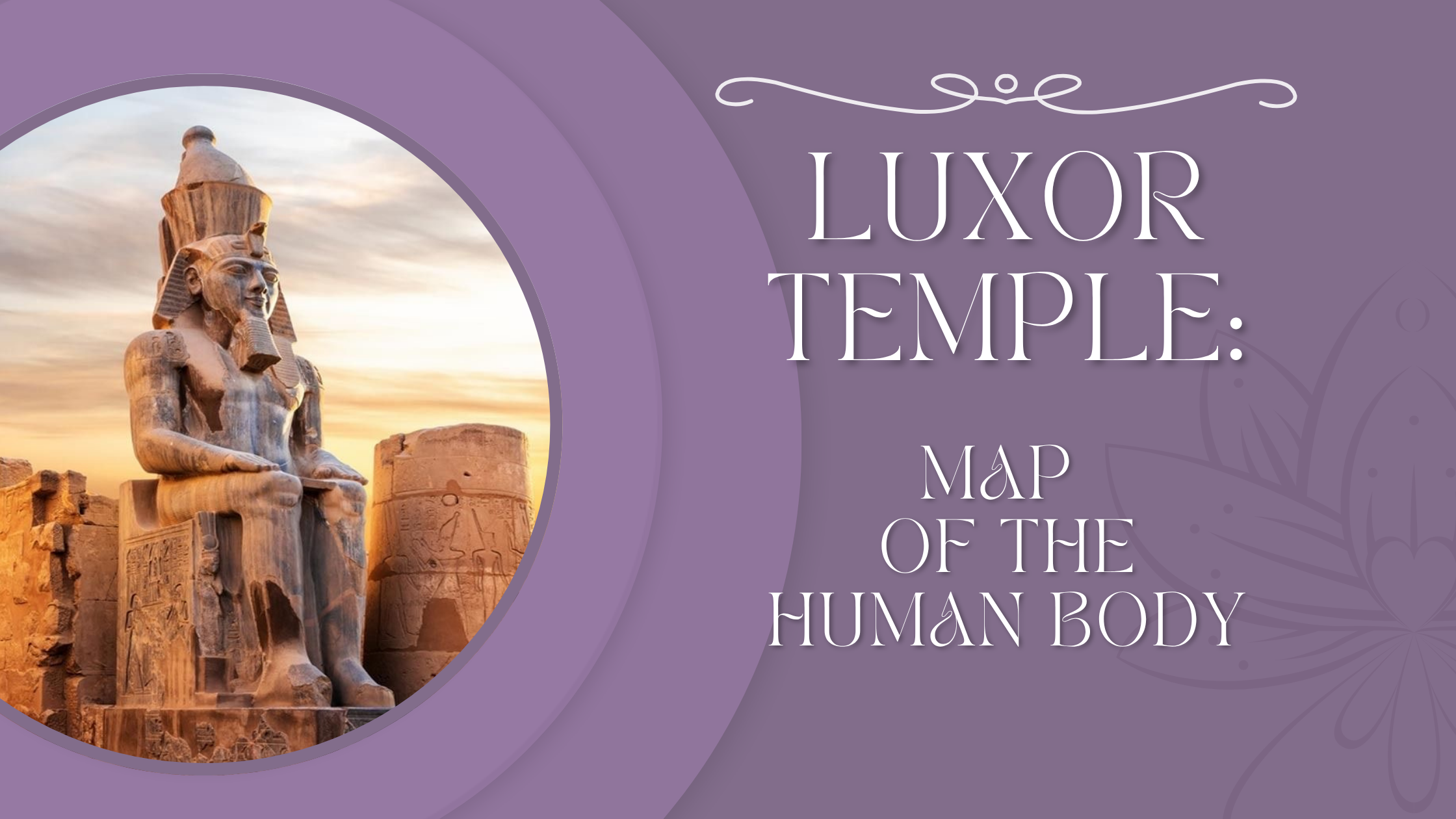
Most people walk through Luxor Temple, admire the massive columns, get their photo with Ramesses II, walk the avenue of sphinxes, and call it a day. And honestly, all of that is worth the trip on its own. But here's the part almost nobody tells you. There's a second temple hiding inside the first one, and it's made of your own body.
The first time I stood inside Luxor Temple, I walked into one of the innermost chambers and my eyes landed on a relief carved into the stone wall.
Two figures, sacred and ancient, joined in something I can only describe as holy. I recognized immediately that I was looking at a divine union. Not because there was anything explicit about the image. On the contrary, it was tender. The two sat facing one another, eyes meeting, hands touching. For some reason the scene struck me low in my body, beneath thought. Without warning, tears came. For the next several hours I could feel energy moving through me, rising from root to heart to mind. This is Sekhem, the life force the Egyptians knew and worked with directly. I did not go looking for that moment. It found me, the way these temples have a way of finding you exactly where you are.
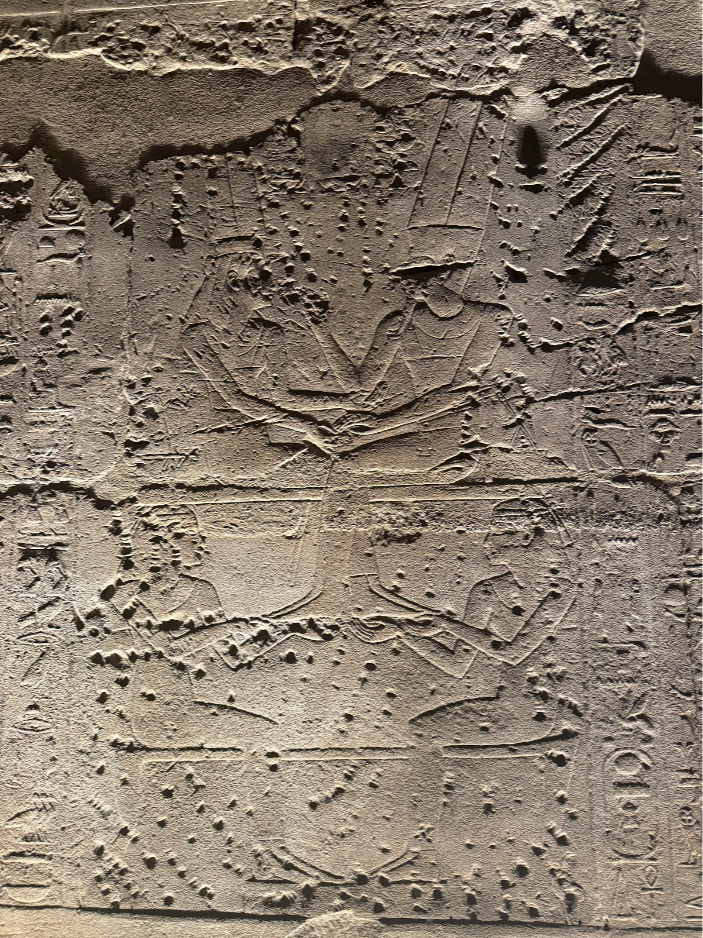
The Birth Room of Amenhotep III, and it tells the story of his conception by the god Amun.
Once home, I began researching what I had seen. The relief belongs to what's known as the Birth Room of Amenhotep III, and it tells the story of his conception by the god Amun. Amun comes to Queen Mutemwiya's chamber in disguise, led there by Thoth, god of wisdom. What follows is not myth in the soft sense. The hieroglyphs are specific. The god's fingers touch the queen's. Life passes between them. Amun names the child before he is born and calls Khnum to shape him on the potter's wheel, spirit before body. The wall unfolds like a sacred timeline from there. The queen carried to the birth chamber. The delivery, attended by the gods of childbirth. The newborn nursed by goddesses in the form of cows. The grown king, purified and blessed.
Egyptologists will tell you this was political, a king proving his right to rule through divine bloodline rather than royal blood alone. That is true. But it is not the whole truth. This room was built to hold something real. The belief that Sekhem, the god's own life force, entered a body at the moment of conception and never fully left it.
That is what I want to teach you about Luxor Temple today. What happened to me in that chamber was not random. It was the temple doing precisely what it was built to do.
Luxor Temple Was Designed as a Map of the Human Body
Luxor Temple was laid out as a body map. The outer courtyards correspond to the feet and legs. The great hypostyle hall, forested with columns, corresponds to the lungs and ribcage, the place where breath moves. The innermost sanctuary, the smallest and darkest room, corresponds to the head. Walking through Luxor Temple is walking through a body, moving from the periphery toward the center, from the outer world toward the innermost chamber where the divine was said to reside.
The French mystic and scholar Schwaller de Lubicz spent over a decade studying these proportions and concluded that the temple's dimensions map directly onto human anatomy, joint for joint, chamber for chamber. Whether or not you take every measurement as literal, the intention is unmistakable. This was not simply a house for a god. It was built as a teaching about the body as sacred ground, long before anyone used that language.
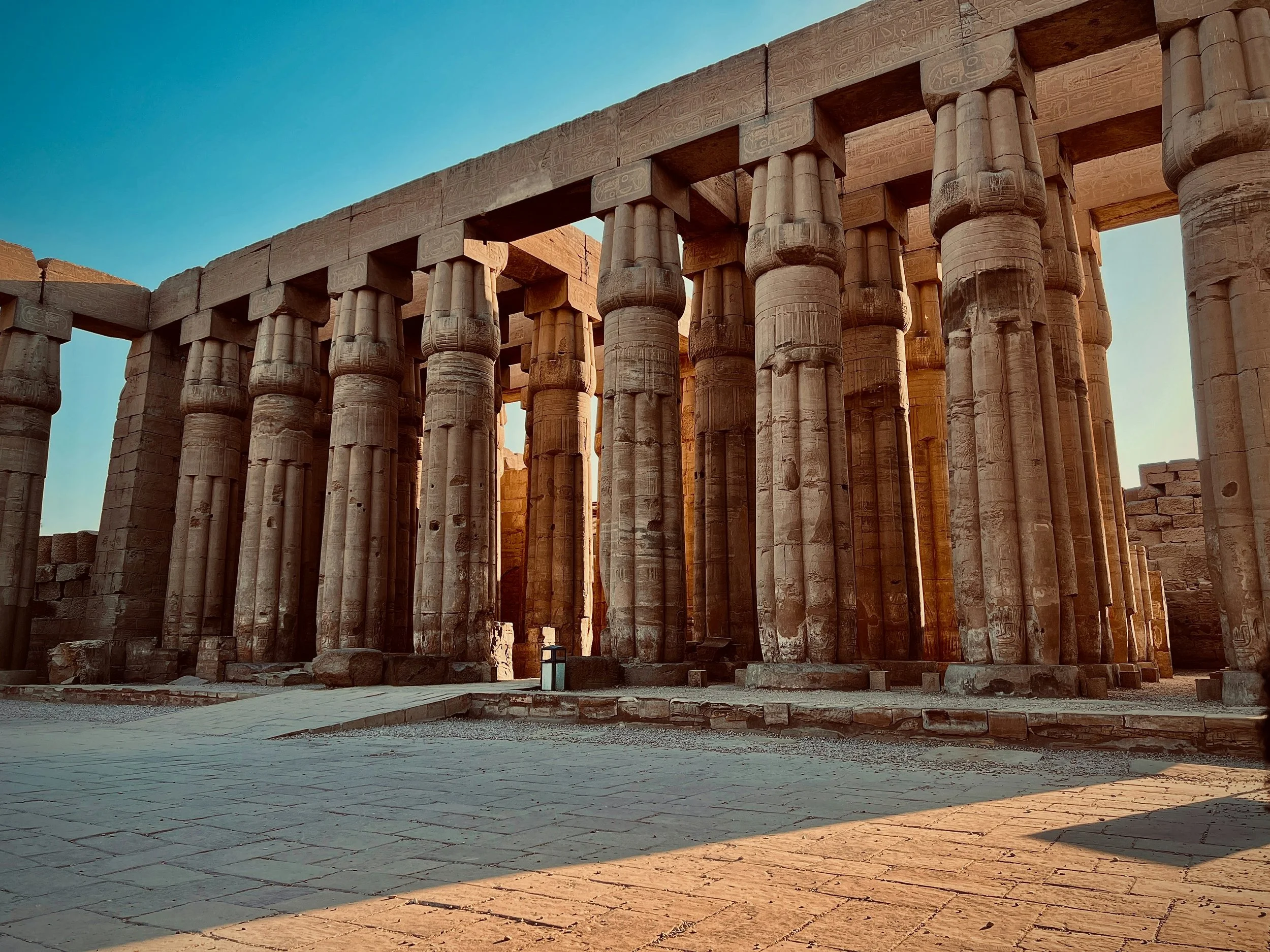
Luxor Temple hypostyle hall columns resembling a ribcage.
The Opet Festival: When the Divine Came Home to the Body
Once a year, ancient Egypt held one of its most significant celebrations at Luxor Temple, the Opet Festival. The sacred barques of Amun, Mut, and Khonsu were carried in procession from Karnak Temple to Luxor, accompanied by music, offerings, and the entire community.
The festival was not simply a religious observance. It was a renewal of the pharaoh's ka, his divine life force, through ritual union with the god at Luxor. The point of the entire procession was to bring the divine back into the body, to renew what a year of living in a body wears thin. Opet was a yearly reminder that divinity does not live somewhere far away from flesh. It lives inside it, and it needs tending.
I think of the Opet Festival often when I stand in Luxor Temple with the women I bring to Egypt. We are not so different from that ancient procession. We arrive carrying the year we have lived, the tiredness, the joy, the grief, and we walk the same path toward the innermost chamber, hoping something in us gets renewed too.
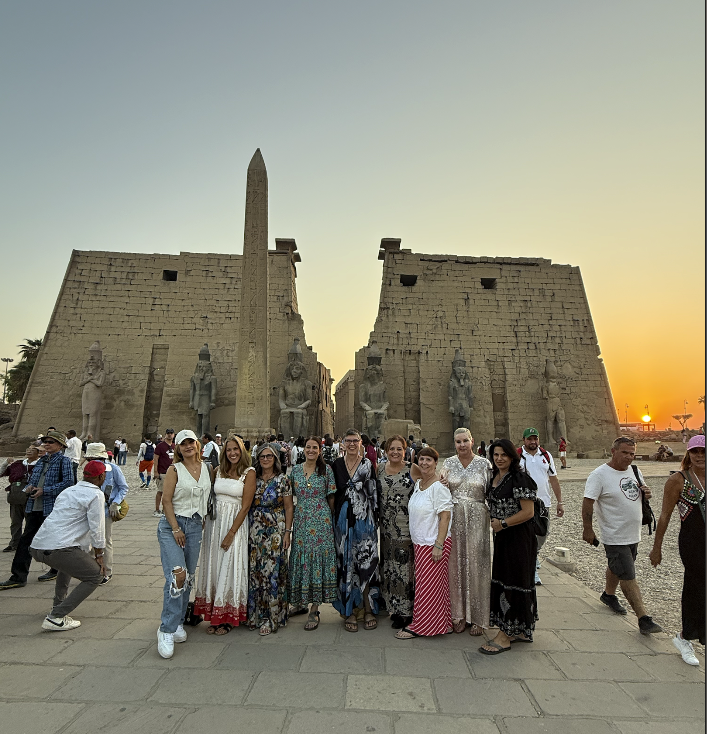
Women walking together through an Egyptian temple on pilgrimage
What the Birth Room Reveals About Divine Embodiment
Deep within Luxor Temple sits the birth room, or mammisi, where reliefs depict the divine conception and birth of Amenhotep III. In this sequence, the god Amun takes the form of the reigning pharaoh to unite with the queen, and from that union comes a ruler understood to carry divinity in human form.
Read only as political theology, this is a story about royal legitimacy. Read as a mystery teaching, it is something else entirely. It is a picture of what it looks like when spirit and matter meet without apology. Not spirit hovering above the body, waiting to be freed from it, but spirit choosing the body as the very place it wants to arrive.
This pattern did not begin or end at Luxor. Osiris and Isis. Sekhmet and Horus. Later, in a different desert, Yeshua and Mary Magdalene. Every mystery school that has ever taught the sacred marriage was pointing at the same truth from a different angle. Divinity does not descend to erase the body. It descends to consecrate it. The pairing changes with the culture and the century. The teaching underneath it does not.
This is the same relief tradition that stopped me in my tracks that day. The union depicted on those walls was never meant to be understood only as physical. It is a picture of vibrational alchemy, consciousness descending into form, spirit and matter meeting as one. Standing in front of it, I did not need the history to explain what I felt. My body already knew.
A Practice to Carry With You
You do not need to stand inside Luxor Temple to begin working with this teaching, though I hope you will one day feel that stone beneath your own feet.
Try this instead. Stand barefoot if you can. Feel your feet as the outer courtyard, the entry point, the place where the ordinary world meets the sacred one. Let your breath rise slowly, the way a visitor once moved through the hypostyle hall, and notice your ribcage as a forest of columns holding space for that breath. Let your attention settle finally in your chest, your heart, your crown, the innermost chamber where something in you has always known it was worth returning to.
This is the same design the ancients built in stone. You carry it with you already.
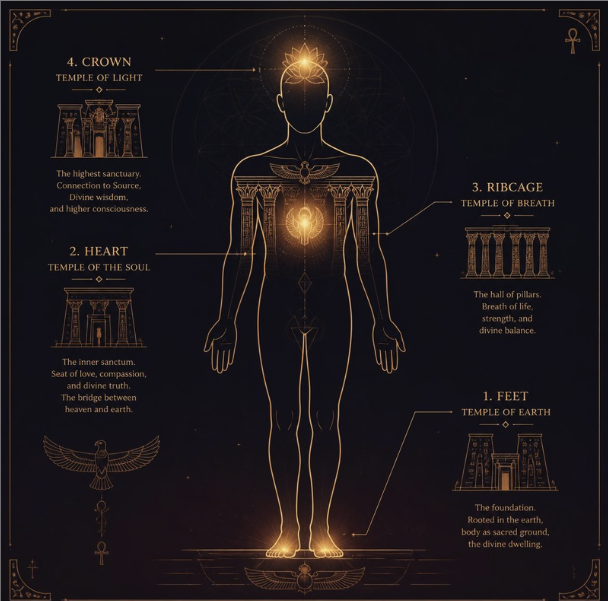
Body map practice inspired by Luxor Temple, feet to crown.
An Invitation
Luxor Temple taught me that the body is not something to transcend on the way to the divine. It is where the divine has always intended to live. That teaching found me through tears in a small stone chamber on the banks of the Nile, and it has not left me since.
This teaching lives fully when it's walked, not just read. Every year I lead a small group of women through Egypt's temples on Rise, Priestess, Rise, a pilgrimage built around exactly this kind of embodied remembrance. You can learn more and see if it is calling you at danielleartigo.com.