Isis and Magdalene: Devotion Resurrected
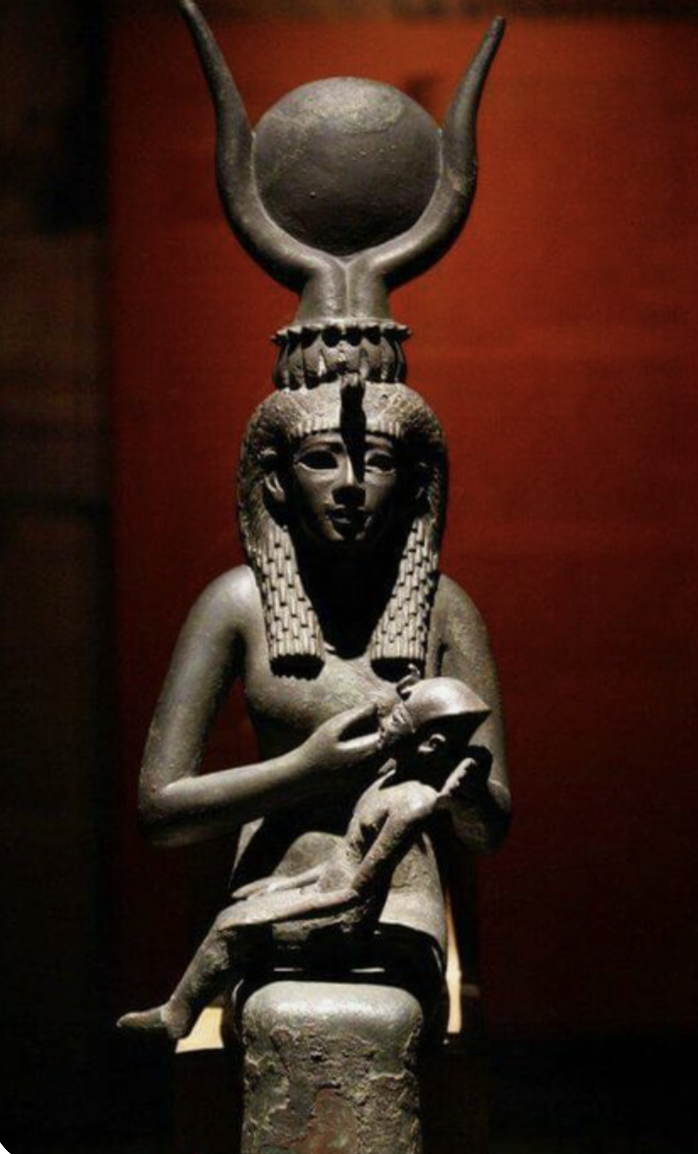
A seated Isis nursing Horus
As many of you know, I just returned from the south of France, where I was scouting the site for one of my future offerings: A Mary Magdalene retreat in May 2028.
The Magdalene has been coming to me for four or five years now. I've channeled messages from her, taught courses shaped by what she's given me, on and off, over that whole stretch of time. And on the plane to France, thinking about what to write for this newsletter, something clicked into place. The parallels between the Magdalene and the goddess Isis.
Two women. Two deaths. Two returns.
Isis knelt over the scattered pieces of her husband's body and refused to let death be the end of the story. Mary Magdalene stood at an empty tomb, grieving a man the world had just killed, and became the first person to see him alive again.
Different continents. Different centuries. Same devotion.
Two Women, One Grief
We have all heard the myth. Osiris had been brutally dismembered, chopped into thirteen pieces. Isis, his beloved wife, scoured the land, reclaiming each piece, one by one.
She searches. She finds every piece. She puts her husband back together with her own hands and her own magic, and in doing so, she doesn't just resurrect him, she becomes the reason resurrection was possible at all.
Magdalene's story moves through the same shape. When the soldiers came for Yeshua, most of his own apostles scattered into the dark, understandably terrified they'd meet the same fate he was about to meet. Peter, who'd sworn he never would, denied even knowing him, three times before the sun came up.
But a few stayed.
The women stayed. Magdalene, his beloved, stood at that cross and watched, when the men who'd walked beside him for years couldn't bring themselves to. She's the one who goes to the tomb while it's still dark, days later, when there's nothing left to do but grieve. She's the first to see him risen, before the apostles who fled ever get to claim that moment for themselves.
Both women stood at the site of death and refused to leave. Both became the hinge the entire resurrection story turns on.
The Lie They Both Carried
Here's where it gets personal for me, because both of these women were diminished in almost identical ways, long after they'd earned their place at the center of the story.
Magdalene's case is well documented, which somehow makes it worse. In 591 AD, Pope Gregory I gave a homily where he conflated her with two other, unnamed women in the Gospels, an anonymous “sinful woman” and Mary of Bethany. From that one sermon, the myth of Mary Magdalene as a repentant prostitute took hold and stuck for nearly 1,400 years. The Catholic Church didn't formally correct the record until 1969. The Eastern Orthodox Church, notably, never bought into it at all, they called her Apostle to the Apostles the whole time.
Isis was diminished differently, but it was the same story wearing different clothes. Her worship, in her older and rawer forms, carried real ferocity, real sexuality, real magic that wasn't polite or safe. As her cult spread through Greece and Rome, and later as Christianity absorbed and replaced it, that rawness got smoothed into something tamer. The wild, grieving, spell-casting goddess who reassembled a body with her bare hands became, over centuries, a softer figure.
Neither woman asked to be softened. Both were, anyway.
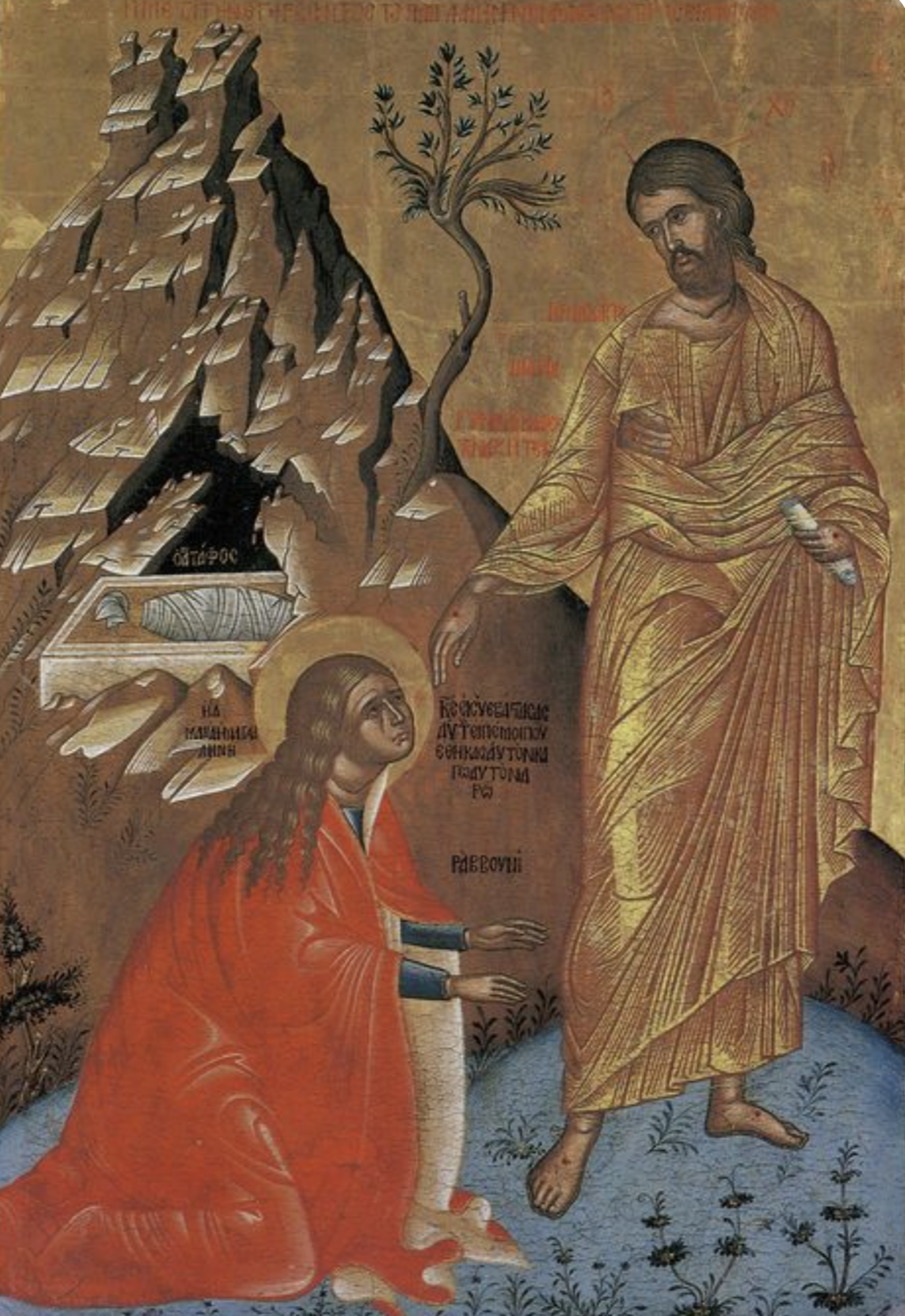
Isis nursing Horus, and Mary Magdalene at the tomb, two images of devotion, separated by centuries.
Written Out, Not Gone
Here's what I find remarkable. Even as both women were being diminished by the institutions that came after them, their images kept surviving underneath the surface.
Many scholars point out that the seated image of Isis nursing baby Horus, one of the most reproduced images in the ancient world, became a visual template for the Madonna and Child. Isis worship was still hugely popular across the Roman Empire when Christianity was spreading, and early Christian art didn't invent its imagery from nothing. It borrowed. The mother and child on Christian icons and the mother and child carved into Isis temples share more than a passing resemblance, right down to the pose.
So even while the church was writing Magdalene out of her rightful place, and while Isis's own worship was being pushed underground, the shape of the divine mother, the grieving, devoted, world-holding woman, kept finding its way back into the art anyway. You can suppress the story. It's harder to suppress the image.
What I Carry From Both of Them
I don't think it's an accident that I feel called to both of these women, in both Egypt and France.
I'm not the only one. There's been a real resurgence of women being pulled toward the Magdalene these past several years, the same way so many of us keep finding our way back to Egypt, to Isis, to the temples. I don't think that's a coincidence either. It feels like both of them are calling their women home at the same time.
There's a thread that ties them together for me, not as historical fact, but as something I feel more than something I can footnote: the idea of the grail, the womb, the vessel that holds and transforms. Whether that's Isis's own body doing the work of reassembling Osiris, or the empty tomb Magdalene stood before, both are, to me, symbols of the same thing. The sacred feminine as the space where death stops being final.
That's not something I can hand you a citation for. It's something I feel in my body. I felt it standing in Sainte-Baume.
Symbols That Carry the Thread
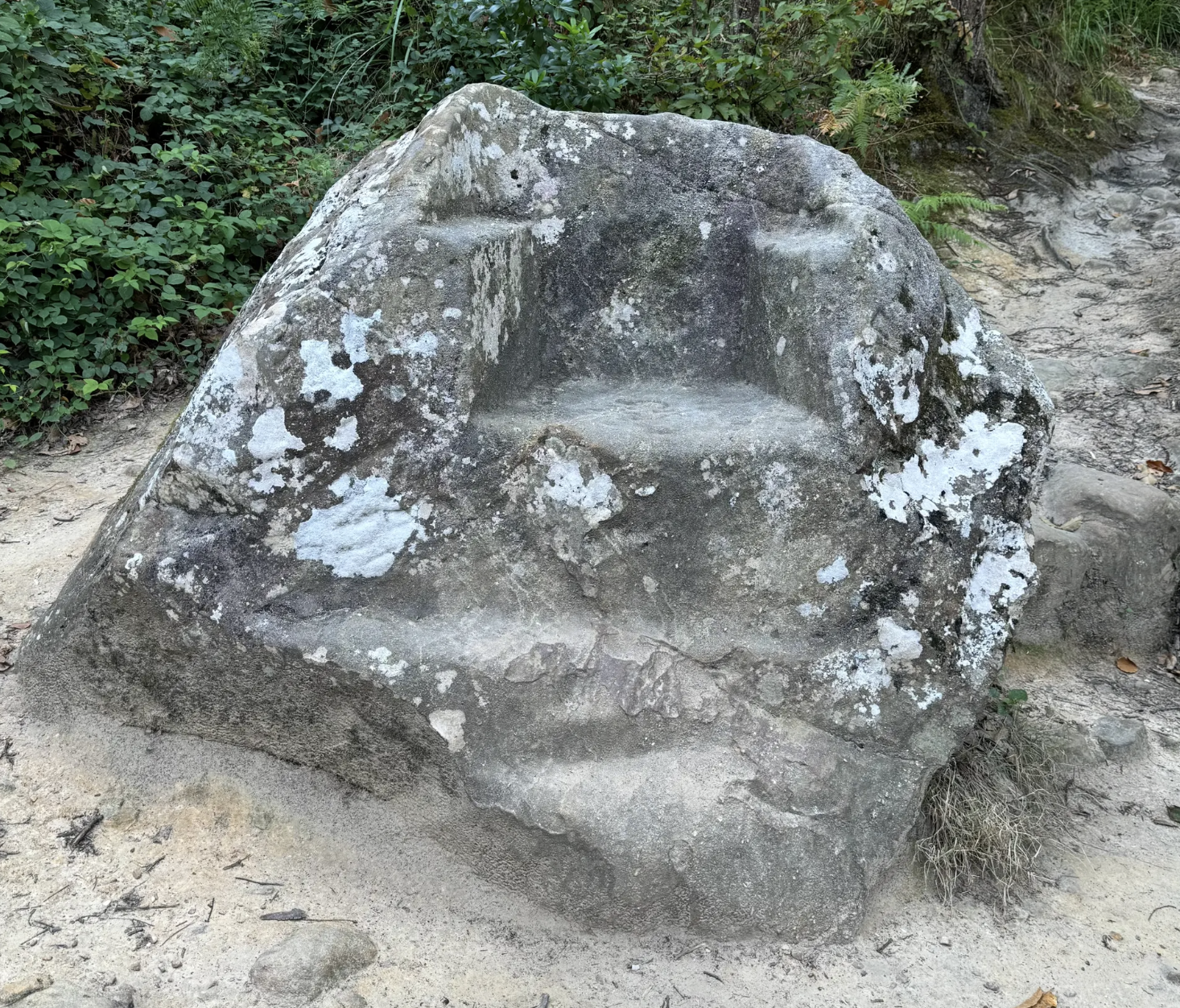
The Isis Chair, Rennes-les-Bains
There's a place in the south of France called the Isis Chair, and it's on my itinerary for 2028. I didn't make it there on my scouting trip, no guide available that day, so this will be a first for me too, right alongside those who choose to take this journey alongside me.
I want to be honest with you about what it is and isn't. It's not an excavated ancient temple. It's not something Egyptologists point to as a documented site of Isis worship. It's a landmark that carries her name, and a story that's grown up around it over time. I find that beautiful rather than diminishing. Isis's name traveled far enough from Egypt that an entire region of France still marks a chair in the earth with it, and soon enough, we'll be the ones sitting in it.
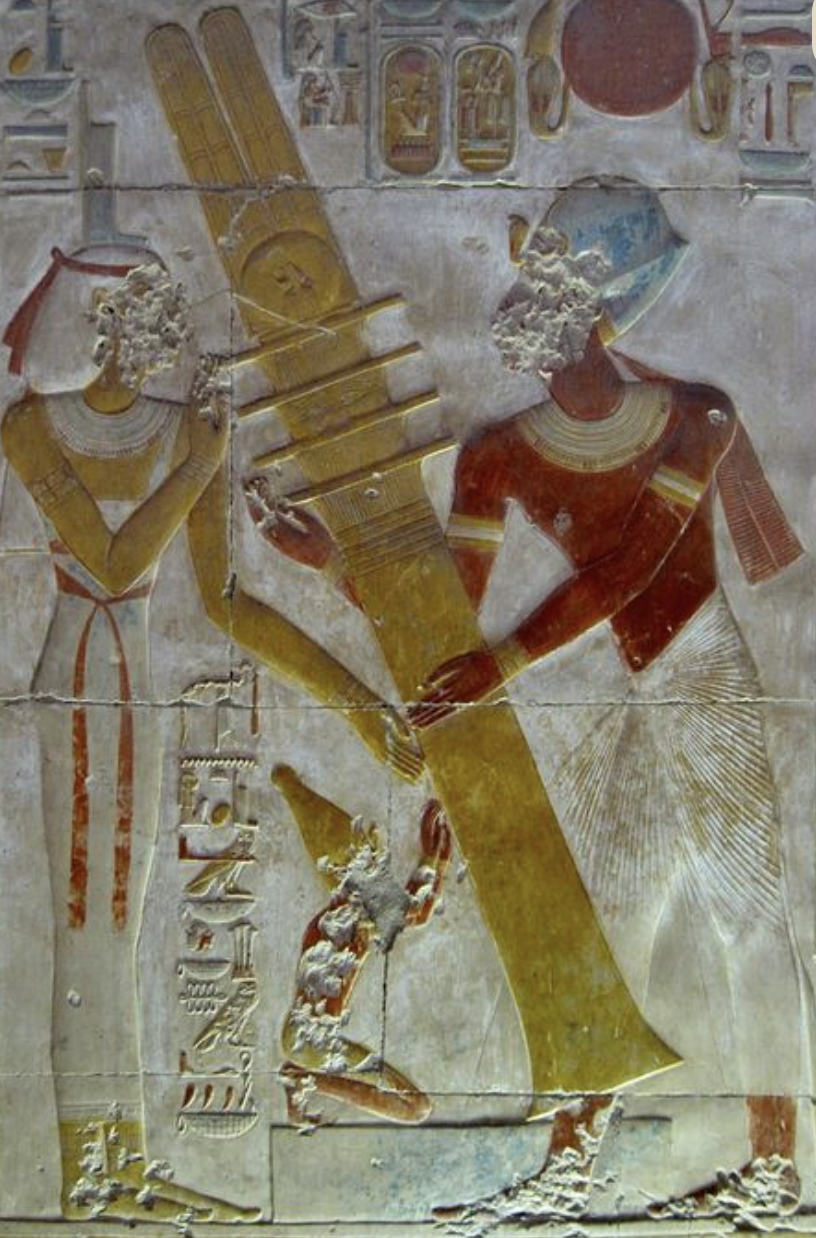
Djed pillar Osiris temple relief
The Djed Pillar is not folklore. It's one of the oldest and most attested symbols in Egyptian religion, representing Osiris's own spine, the axis of stability that holds everything upright. Some later, modern teachers have paired the Djed with the Vesica Piscis, the shape formed where two circles overlap, and placed that pairing alongside Magdalene, reading it as sacred masculine and feminine in union. I want to be clear that this specific pairing isn't ancient. It's a modern esoteric reading, one that plenty of teachers, myself included at times, have found meaningful anyway. A symbol doesn't need to be thousands of years old to be true.
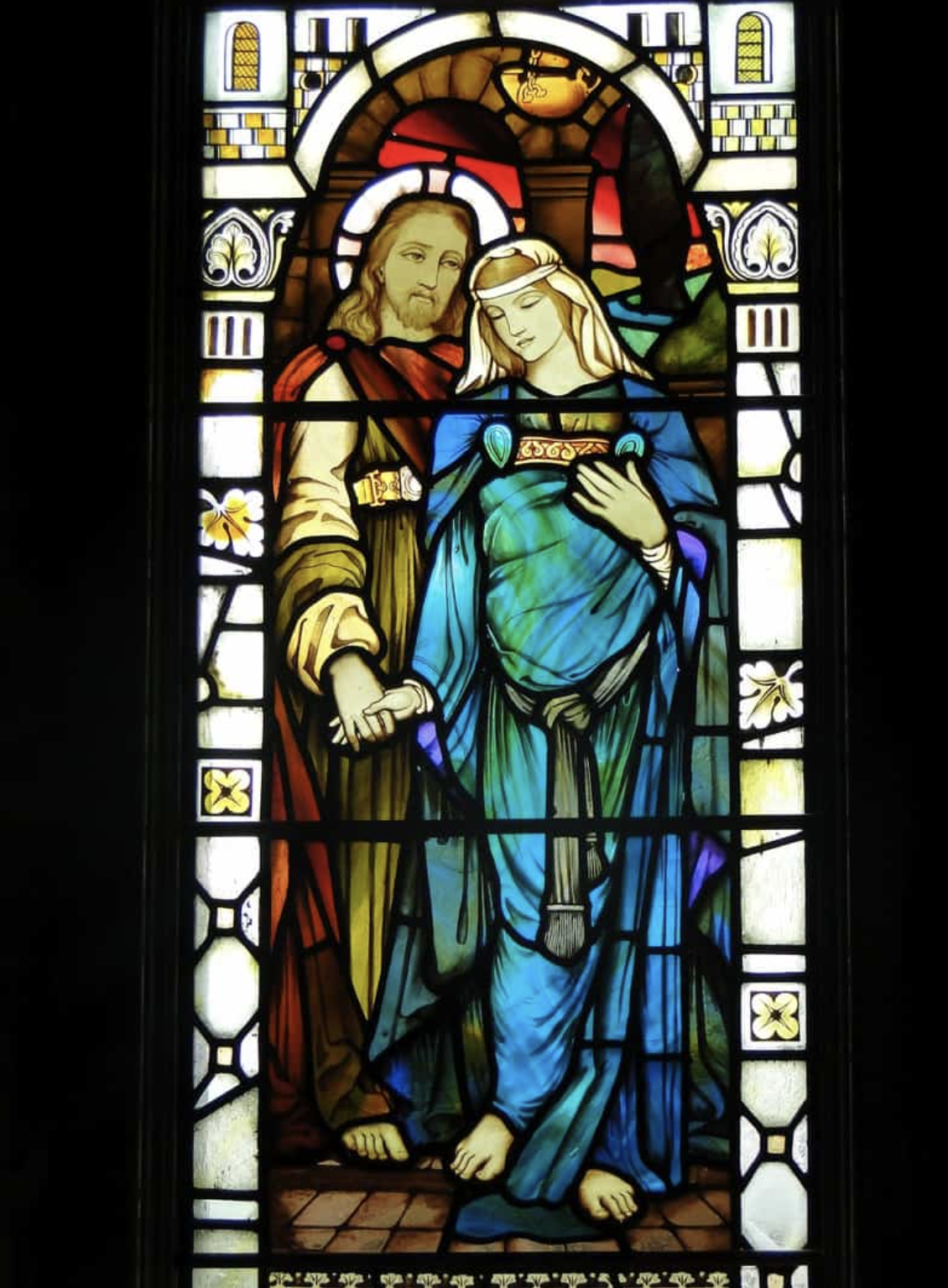
Kilmore Church in the village of Dervaig on the Isle of Mull.
And then there's the marriage itself. Isis and Osiris were husband and wife, and their reunion after his death is central to Egyptian myth. Some modern traditions draw a direct line from that marriage to a proposed union between Magdalene and Christ, a sacred marriage echoing another sacred marriage. I'm not going to tell you that's documented history, because it isn't. But I understand why so many of us are drawn to it anyway. Both stories, at their center, insist that death is not more powerful than devotion. Whether or not the two marriages are literally linked, that insistence is the same in both.
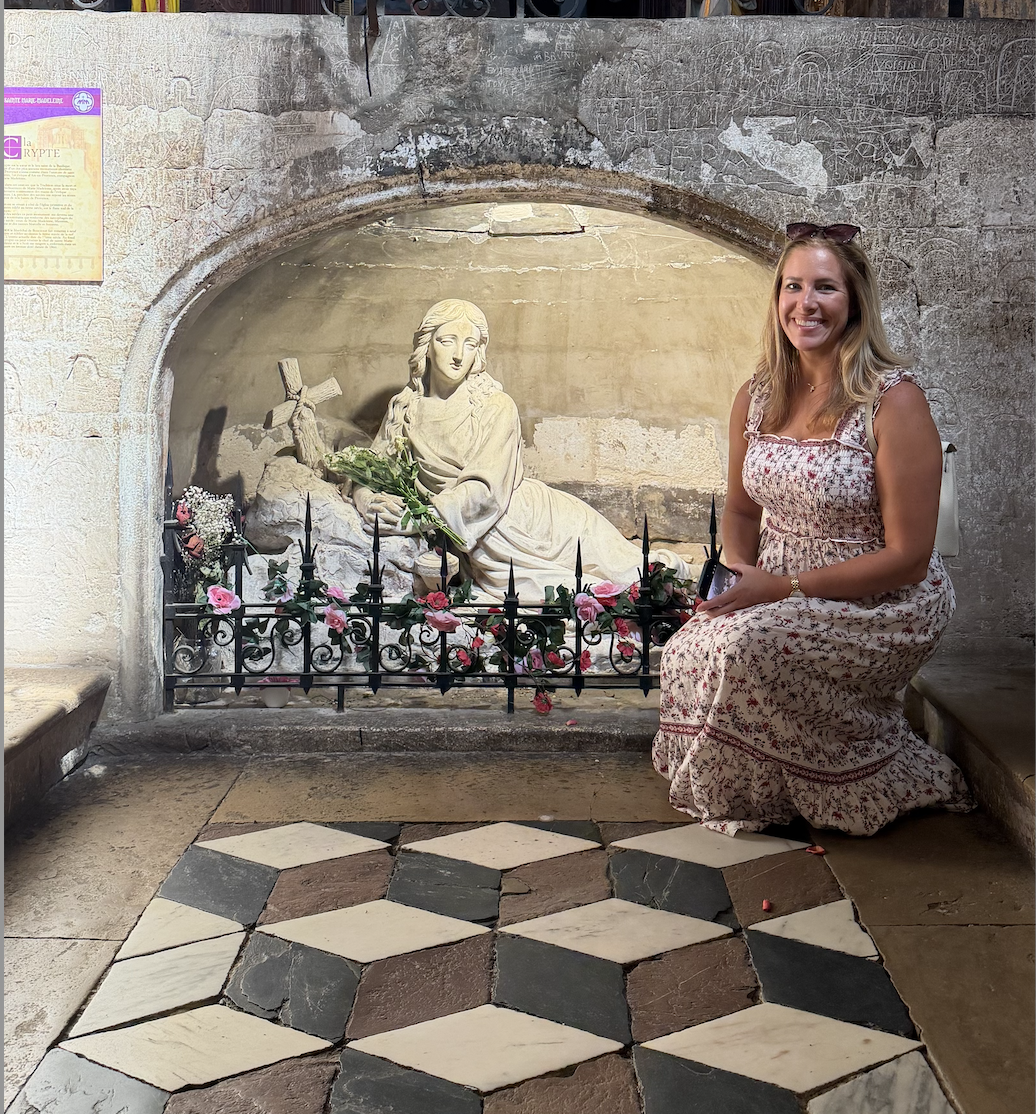
At Mary Magdalene's crypt, Saint-Maximin-la-Sainte-Baume
A Reflection for You
Where in your own life have you been the one holding the pieces together?
Where has your devotion been mistaken for something smaller than it is?
Isis didn't wait for permission to resurrect what she loved. Magdalene didn't leave the tomb just because everyone told her there was nothing left to see.
Neither should you.