The 7 Chakras Explained: What They Are, What Blocks Them, and How to Rebalance

By Danielle Artigo, channel, healer, teacher, and Angelic Reiki Master Teacher
There is a moment I have witnessed hundreds of times in my work as a channel and energy healer.
A woman sits across from me, or joins me on Zoom, or arrives on a pilgrimage after years of searching. She is intelligent, self-aware, doing all the right things in her outer life. And yet something feels off. She is anxious without knowing exactly why. Tired in a way that sleep doesn’t fix. Disconnected from herself in a way she can’t quite articulate.
When I tune in with my guides and with the energy field of the person in front of me, what I am shown is almost always the same: one or more energy centers out of balance. Spinning too fast, too slow, or barely at all. A system that was designed to flow, not flowing.
This is what the chakra system is about. It is a genuine map of the human energy body, refined across thousands of years and, as it turns out, increasingly supported by our growing understanding of anatomy, neuroscience, and endocrinology.
This post is the deepest dive I can offer you into each of the seven main chakras: what they are, where they live, what they govern, how they correspond to structures in your physical body, and what it feels and looks like when they fall out of balance.
The guided chakra balancing meditation in my Grounding and Healing Tools for Anxiety-Free Living course is the free offering I make to anyone who wants to experience this work before committing to the full course. It is 25 minutes, it covers all seven chakras, and it is one of the practices that clients most consistently return to.
But before you practice it, let me give you the full picture. Because understanding what you are doing changes everything about how you receive it.
Where the Chakra System Comes From
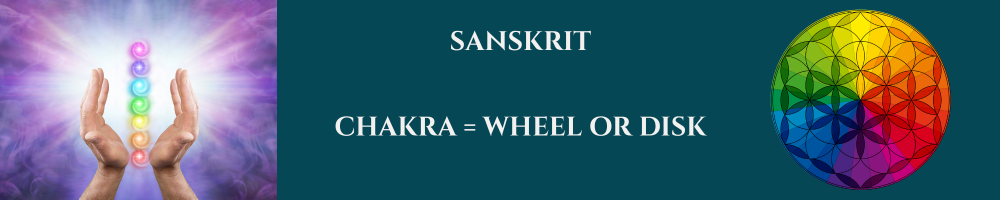
The concept of chakras originates in the Vedic tradition of ancient India, with references appearing in texts dating back more than 3,000 years. The word chakra comes from Sanskrit and means wheel or disk, a reference to the spinning, rotating quality of these energy centers.
While the general concept of energy centers in the body appears across many traditions, the seven-chakra system most people are familiar with today was formalized over centuries of tantric yoga practice and was introduced to the Western world largely through the Theosophical Society in the late 1800s.
The Potential Movement of the 1960s and 70s marked a real turning point, a moment when Eastern philosophy began finding a genuine home in Western thought. It was within this wave of awakening that Anodea Judith wrote what would become one of the most important texts in this space: Eastern Body, Western Mind. In it, she mapped the seven chakras onto the arc of human development, showing how each energy center holds the imprint of the stages we move through in life, and what can happen when those stages leave a wound behind. Her work changed everything, bringing the chakras out of the esoteric and into the territory of real, embodied healing.
What moves me about this history is that the ancient practitioners who mapped these energy centers did not need a microscope or an imaging scan. They went inward. They felt their way into the body's intelligence through deep, sustained inner listening, and what they discovered there bears a remarkable resemblance to what modern anatomy and neuroscience have only recently been able to confirm.
What Modern Science Says
I will be honest: the chakra system has not been fully proven by Western scientific standards. What I can tell you is that the overlap between what ancient practitioners discovered through pure inner observation and what modern anatomy has since confirmed is genuinely striking. The two maps keep pointing at the same thing.
The seven chakras correspond anatomically to the body's major nerve plexuses: bundles of nerves where sympathetic and parasympathetic fibers converge and branch outward to major organs. Think of them as gathering points running along the center of your body. The ancient practitioners placed the chakras in the same locations, thousands of years before anyone could look inside the human body and see what was there.
The root chakra sits at the nerve center governing the pelvis and reproductive organs. The solar plexus chakra lines up with the nerve center connecting the gut to the brain via the vagus nerve. The heart chakra corresponds to the nerve center around the heart. The third eye sits right at the nerve center near the pituitary gland, the command center of the entire hormonal system. Whether the ancients discovered this through pure inner observation or something else, the precision is hard to ignore.

The endocrine gland correspondence
It gets even more interesting. Each chakra also lines up with a specific gland in your body, and the gland governs exactly what the chakra is said to govern. That is not a loose connection. That is a precise one.

Your root chakra corresponds to your adrenal glands, the ones that flood your body with cortisol and adrenaline when you feel unsafe. Your sacral chakra corresponds to your reproductive glands. Your solar plexus chakra corresponds to your pancreas, which regulates digestion and how your body converts food into energy. Your heart chakra corresponds to your thymus, which runs your immune system. Your throat chakra corresponds to your thyroid, which governs your metabolism and your body's ability to regulate energy and expression. Your third eye corresponds to your pituitary gland, the master gland that oversees your entire hormonal system. And your crown chakra corresponds to your pineal gland, which regulates sleep, circadian rhythms, and states of consciousness.
Think about that for a moment. The throat chakra, which ancient teachers said governs your ability to speak your truth and express yourself, corresponds to the thyroid, a gland that, when dysregulated, literally affects your ability to find words, think clearly, and feel energized enough to show up. The third eye, said to be the seat of intuition and inner knowing, corresponds to the gland that acts as the command center for your entire body's chemistry.
The ancients did not have science. They had stillness, inner listening, and thousands of years of careful observation. And somehow, they got it right.
Chakra meditation and psychological well-being
Research is also beginning to catch up with what meditators have known for a long time. A large systematic review published in 2025 looked at 19 rigorous studies on chakra meditation and found consistent improvements in stress response, breathing, and overall well-being. One study found that a heart-centered meditation practice significantly reduced cortisol levels, anxiety, and perceived stress in participants.
There is also this: chakra meditation has been shown to stimulate the pineal gland, which brings us right back to the crown chakra and its connection to sleep, consciousness, and inner knowing.

The science is still catching up. But it is catching up.
The honest summary: while the chakra system as described in its fullness remains outside what Western science can currently measure with precision, the anatomical correspondences are real, the physiological effects of chakra-based meditation are measurable, and the convergence between ancient observation and modern science continues to deepen. I have practiced in this field for over a decade, and I have witnessed things that no current scientific framework fully explains. I hold both the evidence and the mystery with equal respect.
The Seven Chakras: A Complete Guide

Below is each chakra in full detail: its name, Sanskrit name, color, location, what it governs, its nerve plexus and endocrine correspondence, and what it feels like when it is out of balance.
1. Root Chakra (Muladhara) | Red
Location: Base of the spine, perineum, coccyx
Governs: Survival, safety, physical vitality, groundedness, our relationship with the earth, and our basic needs. The foundation of the entire energy system.
Nerve plexus: Inferior hypogastric plexus and coccygeal plexus, governing reproductive organs, rectum, and lower extremities
Endocrine connection: Adrenal glands (producing cortisol and adrenaline, the fight-or-flight hormones). When balanced, we feel supported and safe. When stressed, these glands flood the system with stress hormones.
When out of balance: Chronic anxiety, fear of survival, financial stress, feeling ungrounded or unsafe, disconnection from the body, lower back pain, issues with the legs and feet, digestive problems
During healing sessions and readings, I notice that those with root chakra issues are often carrying pain or trauma from their childhood, or they are facing basic survival challenges in their current lives. Maybe the person just experienced a job layoff and is now fearful about paying bills, or they are not feeling supported by their core family members. The result is that they feel ungrounded and unsafe. I often see this chakra as dull in color, or the energy there feels heavy and stagnant. There is no flow. The overwhelming feeling is fear and sadness.
The work here is to release old wounds, address and reframe current fears, and regulate the nervous system.
2. Sacral Chakra (Svadhisthana) | Orange
Location: Just below and behind the navel, lower abdomen
Governs: Creativity, passion, desire, pleasure, sensuality, emotional fluidity, and our relationship with others. The seat of our creative power and our capacity to feel joy.
Nerve plexus: Superior hypogastric plexus and sacral plexus, connecting to the ovaries in women and testes in men
Endocrine connection: Gonads (reproductive hormones: estrogen, progesterone, testosterone). Governs our creative vitality and our capacity for pleasure and connection.
When out of balance: Creative blocks, emotional numbness or overwhelm, difficulty experiencing pleasure, guilt around desire or sexuality, lower abdominal pain, reproductive issues, feeling disconnected from others
In my experience, most women who come to me for healing have stagnant energy sitting in their sacral center. This usually shows up as bloating, weight gain in the lower abdomen, and an inability to move forward in the work that lights them up. They stop themselves from doing what brings them joy, or what was once joyful begins to feel like a chore, or it brings a sense of anxiety rather than aliveness.
The work here is to incorporate movement into daily life, to reconnect with passion, creativity, and pleasure, and to learn to reach for joy while also honoring what the body is asking for when it needs rest.
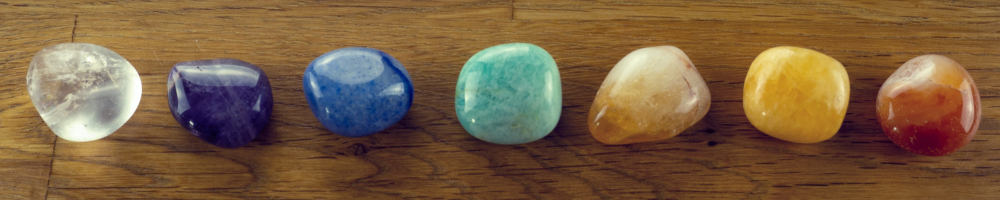
3. Solar Plexus Chakra (Manipura) | Yellow
Location: Between the navel and the base of the sternum, upper abdomen
Governs: Personal power, confidence, will, identity, self-esteem, and our sense of empowerment. The fire center. Our knowing that we are capable.
Nerve plexus: Celiac (solar) plexus, the major nerve hub of the enteric nervous system (the gut-brain), connecting via the vagus nerve to the cranial brain
Endocrine connection: Pancreas (governing digestion and blood sugar regulation). The gut-brain connection lives here: this is why we feel anxiety in our stomachs, why gut instinct is real, and why digestion is often the first system disrupted by chronic stress.
When out of balance: Low self-esteem, difficulty making decisions, powerlessness, anger, control issues, digestive problems, IBS, chronic fatigue, feeling unable to trust oneself
When clients are experiencing solar plexus imbalances, they are disconnected from three core questions: who am I, why am I here, and what do I want. Those answers have become murky. The person has lost touch with their inner guidance system, and there is often a disconnect between the mental and feeling bodies. They are listening more to the mental chatter than to what the body is actually communicating, when really it should be the other way around.
The work here is to go within and re-establish that connection, not as a mental exploration but as a felt, embodied one.
4. Heart Chakra (Anahata) | Emerald Green
Location: Center of the chest, slightly above the physical heart
Governs: Love, compassion, connection, grief, forgiveness, and our capacity to give and receive. The bridge between the lower three chakras (physical, earthly) and the upper three (spiritual, ethereal). The center from which all healing flows.
Nerve plexus: Cardiac plexus, governing the heart and lungs
Endocrine connection: Thymus gland (governing the immune system and T-cell production). Psychoneuroimmunology research confirms that emotional states, including love, grief, and compassion, directly affect immune function through the thymus connection.
When out of balance: Difficulty giving or receiving love, grief that has not been processed, chronic loneliness, inability to forgive (self or others), heart and lung issues, immune dysregulation, closing off from connection
In nearly every energy healing I give, there is some work needed around the heart chakra, usually an unburdening or a clearing out. I often see this area as inflamed, and Spirit frequently uses the word tender to describe the state of this center. The heart carries an incredible amount of energy, and the higher heart area often holds deep grief.
The work here is almost always about feeling worthy to receive love. It is about allowing grief to move through the body rather than storing it, and about honoring the true needs and desires of the heart.
5. Throat Chakra (Vishuddha) | Blue
Location: The throat, the area of the larynx and thyroid
Governs: Authentic expression, communication, truth-telling, our receptivity to higher guidance and divine messages, and what we set into motion in the physical world through our words and choices.
Nerve plexus: Cervical and brachial plexuses, governing the neck, shoulders, arms, and upper torso
Endocrine connection: Thyroid gland (regulating metabolism, energy production, and the body's communication systems). When the thyroid is dysregulated, energy and communication are disrupted, which maps directly to what the throat chakra is said to govern.
When out of balance: Difficulty speaking your truth, saying yes when you mean no, fear of expressing yourself, unexpressed creativity, thyroid issues, chronic throat tension, neck and shoulder pain, feeling unheard or silenced
When someone has imbalances in the throat chakra, it is often the result of having literally been silenced, through conditioning, a lack of confidence, or a deep fear of showing the world who they truly are. The underlying question is: what are you afraid to say? What do you believe will happen if you upset someone or disappoint them? So often, the root fear is that if people saw the real you, fully and completely, they would withdraw their love and support.
Conversely, some people are over-expressing, talking so much that they are wearing themselves out when what they actually need is silence and stillness.
6. Third Eye Chakra (Ajna) | Indigo

Location: Between and slightly above the eyebrows, the forehead
Governs: Intuition, clairvoyance, perception of subtle energy, inner knowing, the ability to see beyond the surface of things. Our access to wisdom beyond what the rational mind can provide.
Nerve plexus: Cavernous plexus, in the region behind the forehead
Endocrine connection: Pituitary gland, the master regulatory gland of the entire endocrine system. The pituitary sits directly behind the third eye point and governs all other endocrine glands. It also responds to light and regulates circadian rhythms, connecting to the third eye's association with inner vision and illumination.
When out of balance: Confusion, indecision, inability to trust intuition, overthinking, headaches and migraines, sleep disruption, feeling spiritually disconnected or blocked, difficulty accessing inner guidance
Spirit will often ask through me in sessions: “What are you afraid to see?” When we block our clairvoyance, our clear seeing, it is almost always because we are afraid of what we might find if we truly look. The third eye does not lie, and somewhere deep down, we know that.
7. Crown Chakra (Sahasrara) | Violet, Gold, or White
Location: Top of the head, the crown
Governs: Divine connection, higher consciousness, spiritual awakening, our sense of unity with something greater than ourselves. The point of contact between the individual self and universal intelligence.
Nerve plexus: The crown has no single corresponding nerve plexus. It is understood to connect to the entire nervous system and is associated with the neocortex, the most evolutionarily advanced part of the brain, governing higher thought, consciousness, and spiritual experience.
Endocrine connection: Pineal gland (governing melatonin production, circadian rhythms, and states of deep consciousness). The pineal gland has been called the seat of the soul. Research confirms it produces DMT and other compounds associated with non-ordinary states of consciousness.
When out of balance: Feeling spiritually disconnected or lost, existential emptiness, inability to access higher guidance, sense of meaninglessness, depression, disconnection from one's sense of purpose
When the crown chakra is blocked, it is almost always a sign of disconnection from Source and higher wisdom. Spirit has shown me again and again that our guides are always present, always offering guidance, but we often choose to turn that channel off. Sometimes it is because we do not want to hear what they are saying, because their guidance requires action: leaving the job that is keeping us from our true purpose, ending a relationship that no longer serves our growth, changing something fundamental about how we are living. It is easier, in the short term, to go quiet.
What Causes Chakras to Fall Out of Balance
The life force in each chakra can be processed, transmuted, and released so that we can consciously move forward rather than keep recreating the same patterns and experiences. But we can only do this if we understand what causes imbalance in the first place.
Major life transitions: relationship endings and beginnings, career changes, moves, loss, birth, death. During these in-between times, we are not the person we have been, and not yet the one we are becoming. The uncertainty creates energetic disruption.
Chronic stress and prolonged fight-or-flight activation: when cortisol floods the system consistently, it directly impacts the adrenal-root chakra connection and creates a cascade of imbalance upward through the system.
Unexpressed emotions: grief that has no outlet, anger that cannot be spoken, love that cannot be given or received. Emotions are energy, and when they have nowhere to go, they store in the body and in the energy centers associated with them.
Suppression of authentic self-expression: years of keeping quiet, of hiding gifts, of saying yes when the truth is no. The throat chakra carries the weight of everything that has not been said.
Spiritual disconnection: when we have lost the thread back to our own knowing, our own purpose, our own relationship with something greater. This creates emptiness at the crown and confusion at the third eye.
I have seen clients with root chakra imbalances that traced directly to childhood experiences of physical insecurity. I have worked with women whose heart chakras had closed so tightly after loss that even receiving kindness felt dangerous. I have sat with healers and teachers whose throat chakras were almost silent because they had spent decades keeping their gifts hidden out of fear.
None of this is permanent. That is the promise of this work. The life force in each chakra can be restored.
How the Guided Chakra Balancing Meditation Works
The meditation I offer in my grounding course moves through each chakra in sequence, from root to crown. As you breathe into each center, you are doing several things simultaneously.
Bringing conscious attention to the energy center activates it. Awareness itself is a form of energy. Where attention goes, energy flows.
Visualizing the color associated with each chakra stimulates the corresponding vibrational frequency. Color is light at specific wavelengths, and the body responds to it.
Breathing into each center activates the vagus nerve and the nerve plexus at that location, creating measurable physiological change.
Spending time at each center gives the emotional and energetic content held there an opportunity to be witnessed and released rather than suppressed.
Moving from root to crown mirrors the natural direction of kundalini energy as described in the yogic tradition: rising from earth through the body toward divine connection.
You do not need to believe in any particular framework for this to be effective. You simply need to be present, to breathe, and to allow your attention to be guided. The body does the rest.
My Experience With This Practice
I return to the chakra balancing meditation regularly, particularly when I have been through a period of intensity, when I feel energetically scattered, or before sessions where I will be channeling or holding space for others.
As a channel, I work with energy at a level that requires my own system to be as clear and balanced as possible. When my chakras are out of alignment, particularly when my third eye is overwhelmed, or my root is ungrounded, the quality of what I receive is affected. The transmission is less clear. I feel the difference immediately.
What I notice most is the heart chakra. As someone who works deeply with people going through profound transitions, I am constantly in the territory of the heart: grief, love, loss, courage, and forgiveness. I have learned over the years that regular attention to the heart center is not optional for me. It is maintenance. It is how I stay open without becoming depleted.

About Danielle Artigo
Danielle Artigo is a channel, healer, teacher, and priestess who has been communicating with guides in spirit since her mid-20s. She channels the Ascended Masters, Angels, and high-level guides, leads sacred site pilgrimages to Egypt and beyond, and teaches Angelic Reiki in the United States and internationally. Her Grounding and Healing Tools for Anxiety-Free Living audio course brings together seven practices she returns to most consistently in her own life and in her work with clients. Learn more at danielleartigo.com.
Sources
Kaur et al., Journal of Pharmaceutical Negative Results, 2023. Malhotra et al., PMC/Cureus, 2024.
Nicole's Ritual Universe, Chakras and Endocrine System analysis, citing psychoneuroimmunology research and neuroscience literature, 2025.
Systematic review published in Journal of STEAM Research, 2025. Thakur et al., Frontiers in Psychology, 2023.